Real-world evidence
Caporusso et al case series
In real-world patients (retrospective case series), NuShield® was used as a protective barrier in a wide variety of wounds (N=50), including VLUs (n=14), DFUs (n=24), and other wounds (pressure ulcers, nonhealing surgical, ischemic, mixed etiology, and nonhealing amputation; n=12).
DFU=diabetic foot ulcer; VLU=venous leg ulcerMedian time to wound closure
When NuShield was used as a protective barrier as part of the course of wound management.
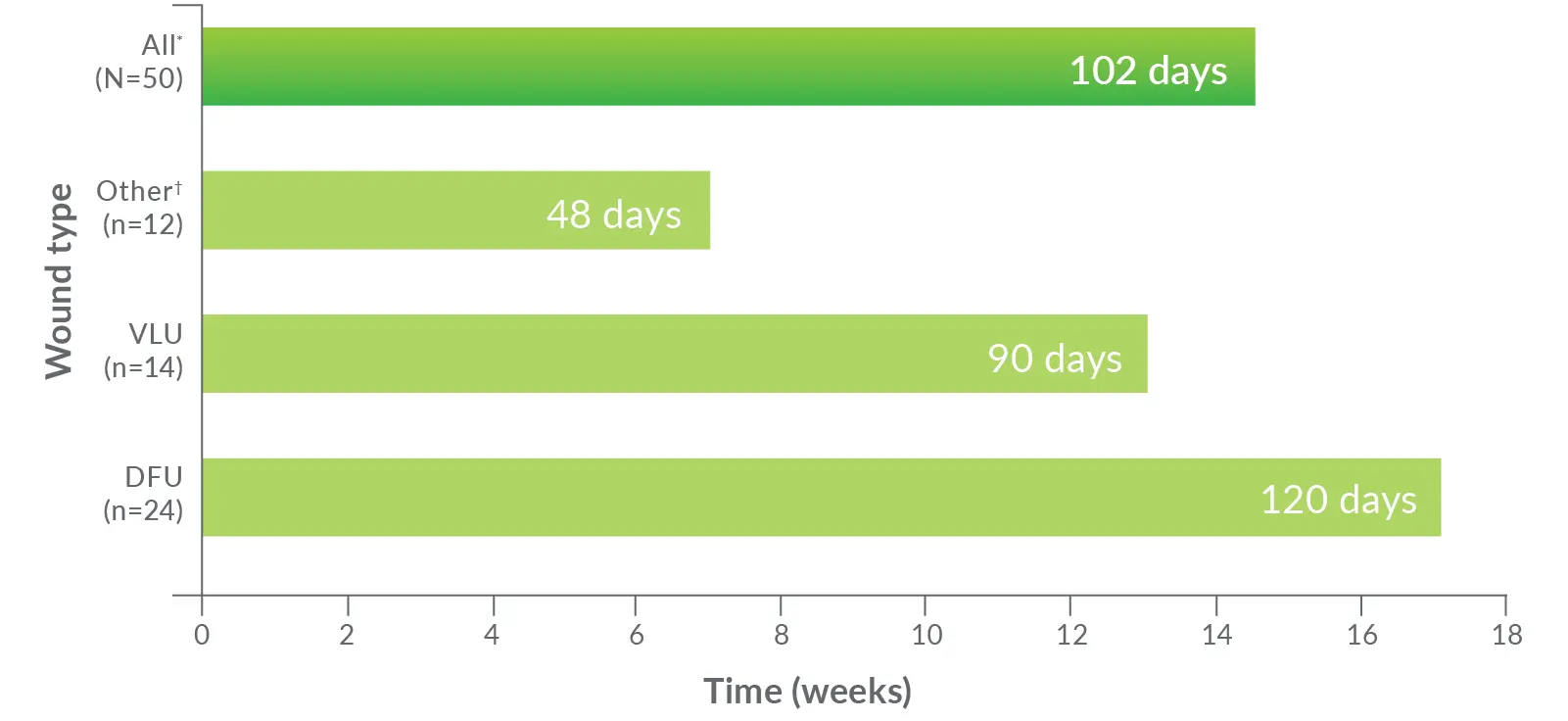 Estimated median time to complete wound closure for wounds from a Cox regression model with terms for age, sex, wound type, wound duration, baseline wound area, and duration in clinic. Test of equality over strata: P=0.071 (Wilcoxon). *All wounds includes DFUs, VLUs, and other wounds. †Other includes 3 pressure injuries; 4 nonhealing surgical, 1 ischemic, and 1 mixed etiology wound; 1 nonhealing amputation; and 1 not identified.
Percentage of wounds closed by week
When NuShield was used as a protective barrier as part of the course of wound management.
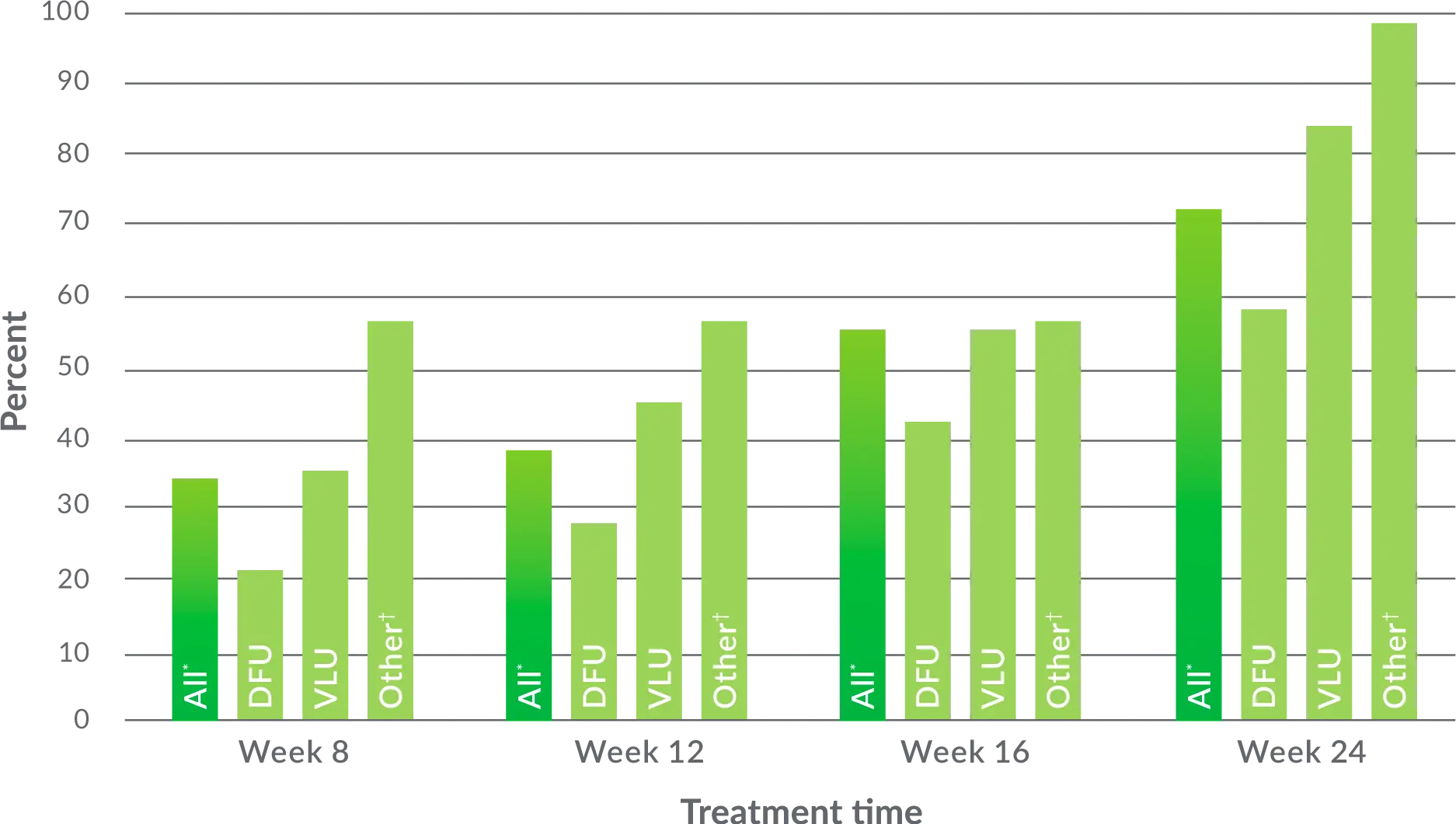 Estimated frequency of complete wound closure for wounds from a Cox regression model with terms for age, sex, wound type, wound duration, baseline wound area, and duration in clinic. Test of equality over strata: P=0.071 (Wilcoxon). *All wounds includes DFUs, VLUs, and other wounds. †Other includes 3 pressure injuries; 4 nonhealing surgical, 1 ischemic, and 1 mixed etiology wound; 1 nonhealing amputation; and 1 not identified.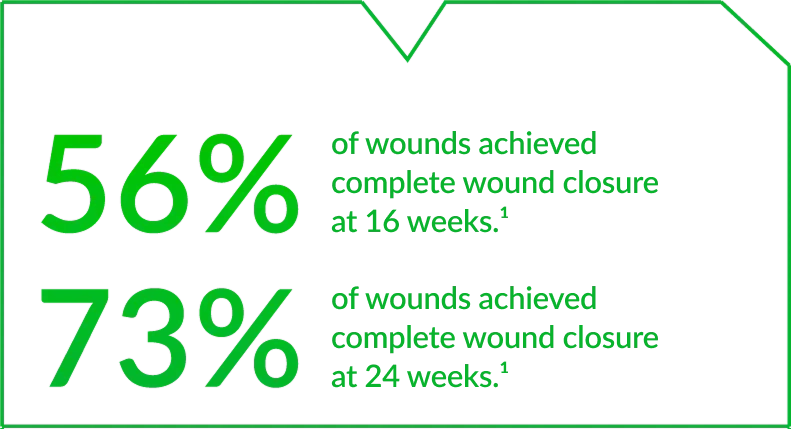
Of those wounds that did not achieve wound closure, 9 (18%) had >90% wound closure, and 8 (16%) had wound closures ranging from 60% to 90% by the last observation.
Composition comparison for NuShield
See the results comparing NuShield to another commercially available dHACM, or talk to an Organogenesis Tissue Regeneration Specialist about the dehydrated placental allograft tissue product that retains all native layers.
Contact usPlease refer to the NuShield instructions for use for usage and safety information.
References: Data on File, Organogenesis Inc. Supporting information available upon request.